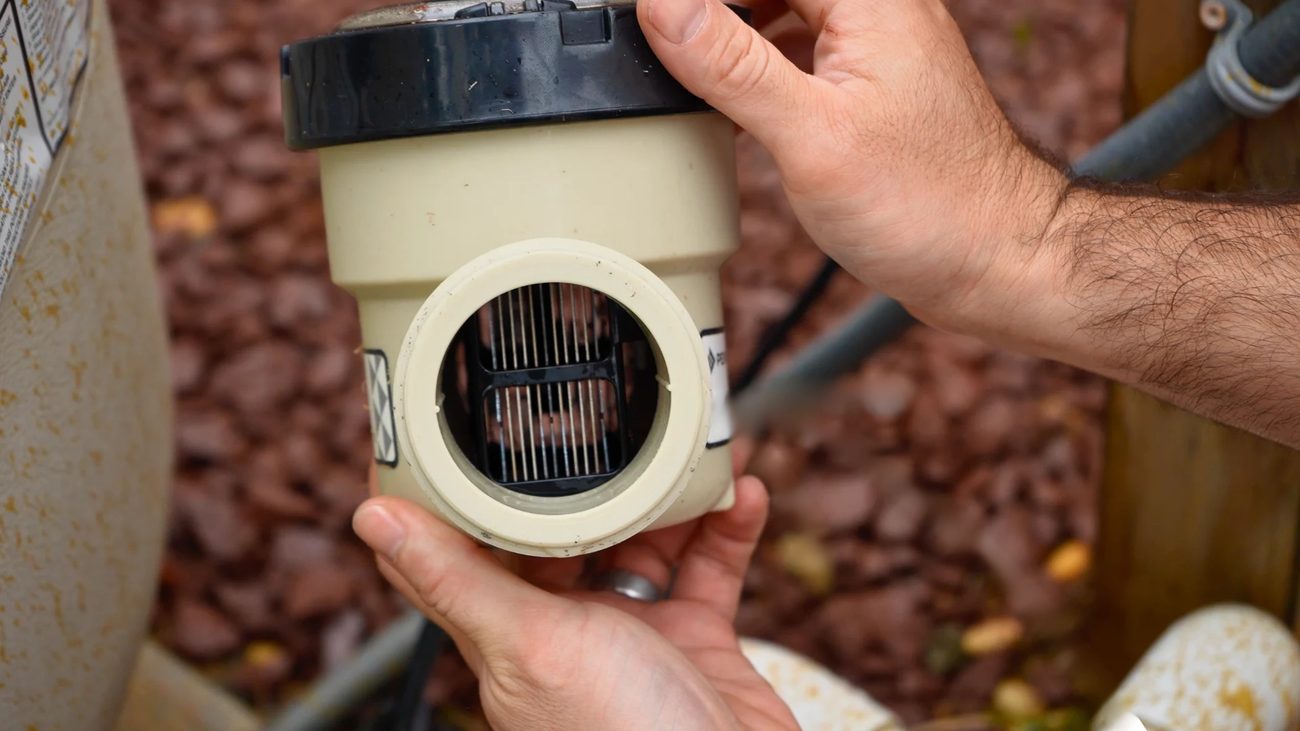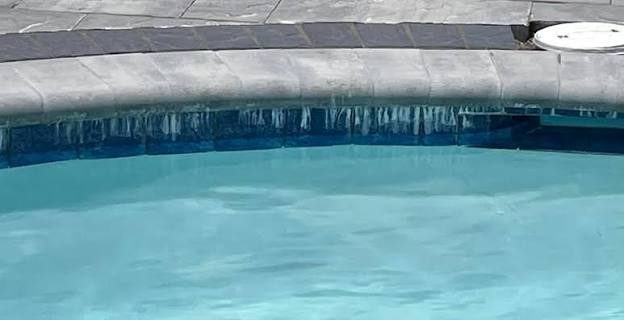
You pulled the cover off, or you just looked out the back window, and the water is green. Somewhere between a light tint and pea soup. It happens fast here. A few hot days, a summer storm off the Guadalupe, a pump that quietly stopped running, and a clear pool turns green almost overnight.
The good news is that a green pool is almost always fixable at home, and it is rarely as bad as it looks. The bad news is that most people make it worse before they make it better, usually by dumping in shock at the wrong time or skipping the one step that actually decides whether any of it works. This is the order we follow on green-to-clean jobs across New Braunfels and Comal County, written so you can do it yourself.
Why New Braunfels Pools Turn Green in the First Place
Green water is algae. Algae shows up when your chlorine drops far enough that it stops keeping the water sanitary, and then our climate does the rest. Long swim seasons, weeks of high heat, spring and summer pollen, and the occasional storm that dumps organic debris all feed it. A pool that would coast for a month up north can bloom in a matter of days in a Hill Country July.
There are two local wrinkles worth knowing before you start. First, a lot of New Braunfels pools run high on cyanuric acid, the chemical in stabilized chlorine tablets. Too much of it and your chlorine gets “locked,” meaning the test says you have chlorine but it cannot do its job. Second, the water that fills most pools here comes through the Edwards Aquifer and runs hard. That hardness does not cause algae, but it does affect how your water balances while you are trying to fix it. Both matter later, so keep them in mind.
Before You Touch a Chemical: Skim and Fish Out the Debris
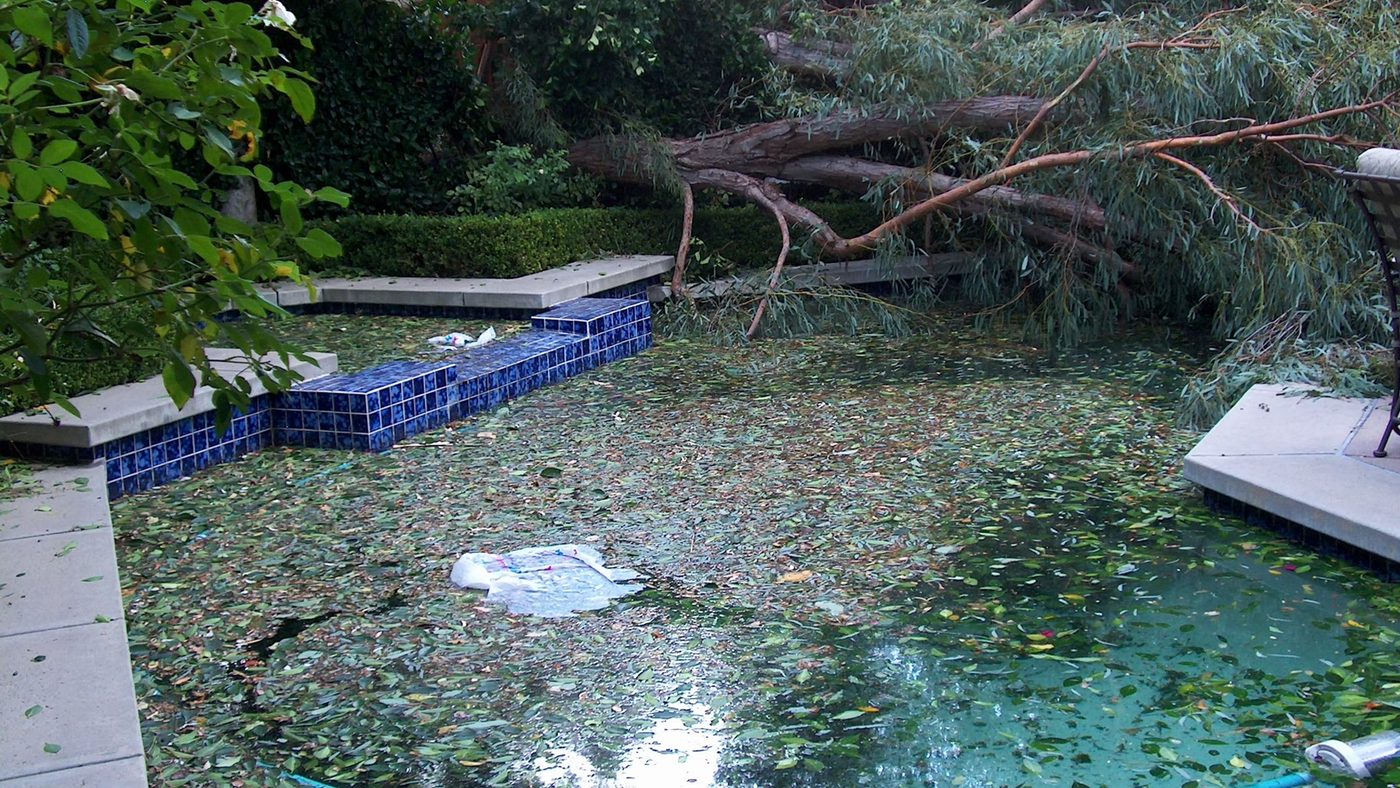
Get the big stuff out first. Skim the surface, then use a deep net to scoop leaves, twigs, and sediment off the bottom. Do not reach for the vacuum yet. Large debris will clog your lines and can damage your pump, and vacuuming murky water just stirs everything back up.
Every leaf you remove by hand is organic matter your chlorine does not have to burn through later. This step feels tedious and it is the one everyone wants to skip. Do not skip it.
Test the Water, and Fix pH Before Anything Else
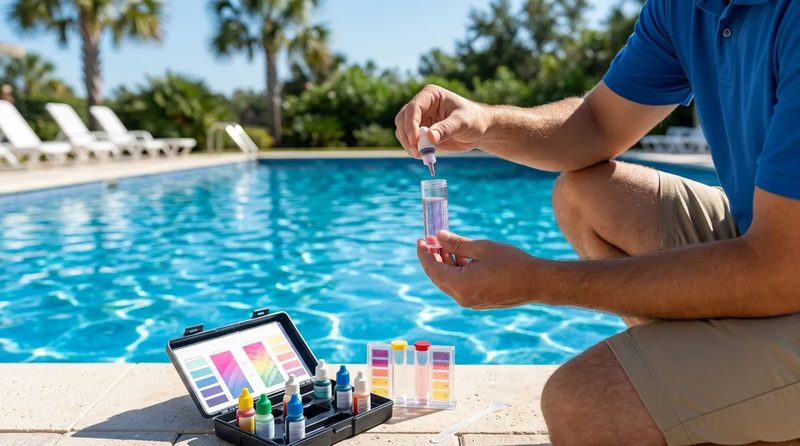
Test pH, total alkalinity, and free chlorine. The reading that decides your whole day is pH.
Chlorine does its best work at a pH between about 7.2 and 7.4. Let the pH drift up toward 8.0 and you lose more than half of your chlorine’s killing power the moment you add it. That is the single most common reason a homeowner shocks a green pool, waits two days, and sees no change. The chlorine was there. It just could not work. Bring pH down with muriatic acid before you shock, not after.
Why pH decides everything
Share of your chlorine that is active sanitizer (hypochlorous acid) at each pH level
At pH 8.0, less than a third of your chlorine is doing any work. Based on the hypochlorous acid dissociation curve at 25°C.
Brush the Walls, Floor, and Steps
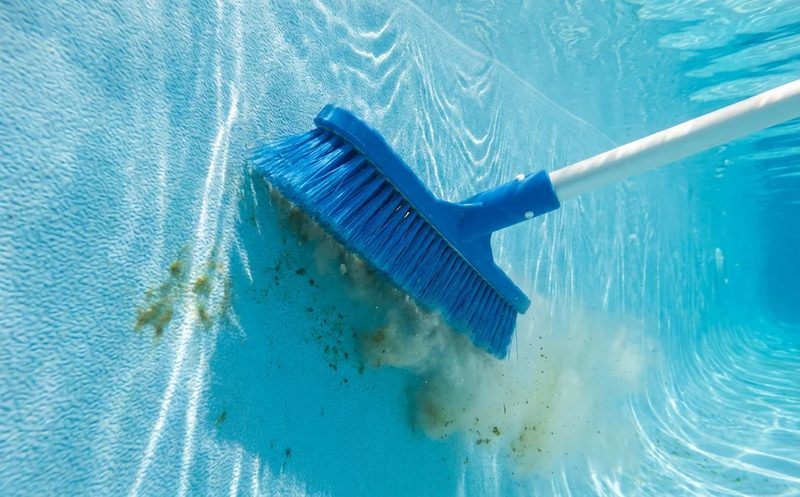
Algae clings to surfaces, and it hides in the places water moves slowest: steps, corners, behind ladders, the shady end. Brushing knocks it loose into the open water where your chlorine can actually reach it. Scrub everything, including the spots you cannot see well. Plaster and pebble surfaces can take a stiff brush. If you have a vinyl liner, use a soft brush so you do not tear it.
Shock at Dusk, and Do Not Go Light
Now you shock. The goal is to drive chlorine high enough, fast enough, to overwhelm the bloom.
Timing matters more than people expect. Shock at dusk or after dark. Add it in the middle of a bright afternoon and the sun burns off much of your chlorine before it finishes the job. For a typical 20,000 gallon pool, plan on roughly 6 to 8 pounds of cal-hypo shock, and step up toward 10 pounds if the water is dark green and you cannot see far below the surface. Dissolve or broadcast it according to the label, then let it work.
Filter, Backwash, and Be Ready to Repeat
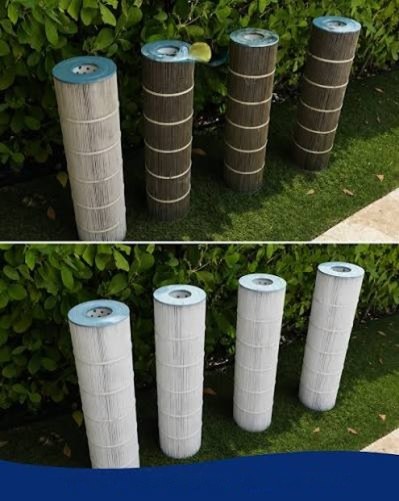
As the algae dies it turns from green to cloudy gray or white, and all of that has to come out through your filter. Expect your filter pressure to climb fast. Backwash a sand or DE filter, or rinse a cartridge, a few times over the first day or two as it loads up. A clogged filter stops cleaning, and a lot of “it turned blue then went cloudy and stalled” stories are really just a filter that needed cleaning and did not get it.
One round often is not enough. If the water is cloudy but no longer green, you are winning. Test again after 24 hours, and if free chlorine has dropped below about 3 ppm, shock a second time. A clarifier the next day helps bind the fine dead algae so your filter can grab it.
When It Is Clear Again, Rebalance and Keep It That Way
Once you can see the bottom and the water is holding chlorine, rebalance everything: pH, alkalinity, chlorine, and stabilizer. This is also the moment to deal with that locked-chlorine problem if your cyanuric acid was sky high. The only real fix for too much stabilizer is to dilute, which means draining part of the pool and refilling. It is worth doing, because a pool that stays “green no matter how much shock I add” is usually a stabilizer problem, not a chlorine problem.
Then the part that actually keeps it from happening again: steady weekly care. Most green pools are not bad luck. They are a pool that quietly went a couple of weeks without balanced chlorine while life got busy. Consistent weekly pool service and regular filter cleaning are what stop the cycle.
When to Stop and Call a Pro
Doing it yourself makes sense for most light to moderate blooms. There are a few points where handing it off saves you money rather than costing it. If you cannot see more than an inch into the water, if it has gone past green toward black or brown, if you have chased it with shock for a week and it keeps coming back, or if the green went away and left stains behind on the plaster, the pool is telling you something a bucket of shock will not fix. Black algae roots into plaster. Persistent regrowth usually means locked chlorine or a circulation problem. Staining after a bloom often points to metals or a surface that needs an acid wash.
Pool still green after all that?
Our green-to-clean recovery handles the chemistry, brushing, filter cleaning, and the equipment check that tells us why it happened, so it does not come back in three weeks. Serving New Braunfels and Comal County.
See Green-to-Clean Recovery