Your salt system is flashing a low-chlorine or “inspect cell” light, or the water is starting to slip even though the salt reads right where it should. Nothing looks broken, but the pool is not getting the chlorine it used to. So you start wondering whether the cell is dying and you are about to be out a few hundred dollars.
Here is what makes this one stressful: a scaled-up salt cell quietly makes less and less chlorine, so the water drifts, algae gets an opening, and it is easy to panic and buy a new cell you may not need. It is just as easy to go the other way, grab the muriatic acid, and scrub or soak a perfectly good cell so aggressively that you strip its coating and actually shorten its life. Both mistakes cost real money.
The good news is that a five-minute look at the plates tells you which situation you are in. This guide walks you through inspecting the cell, cleaning it safely only when it needs it, and reading the signs that mean it is genuinely time to replace it, so you spend money only when you have to.
What the Salt Cell Actually Does
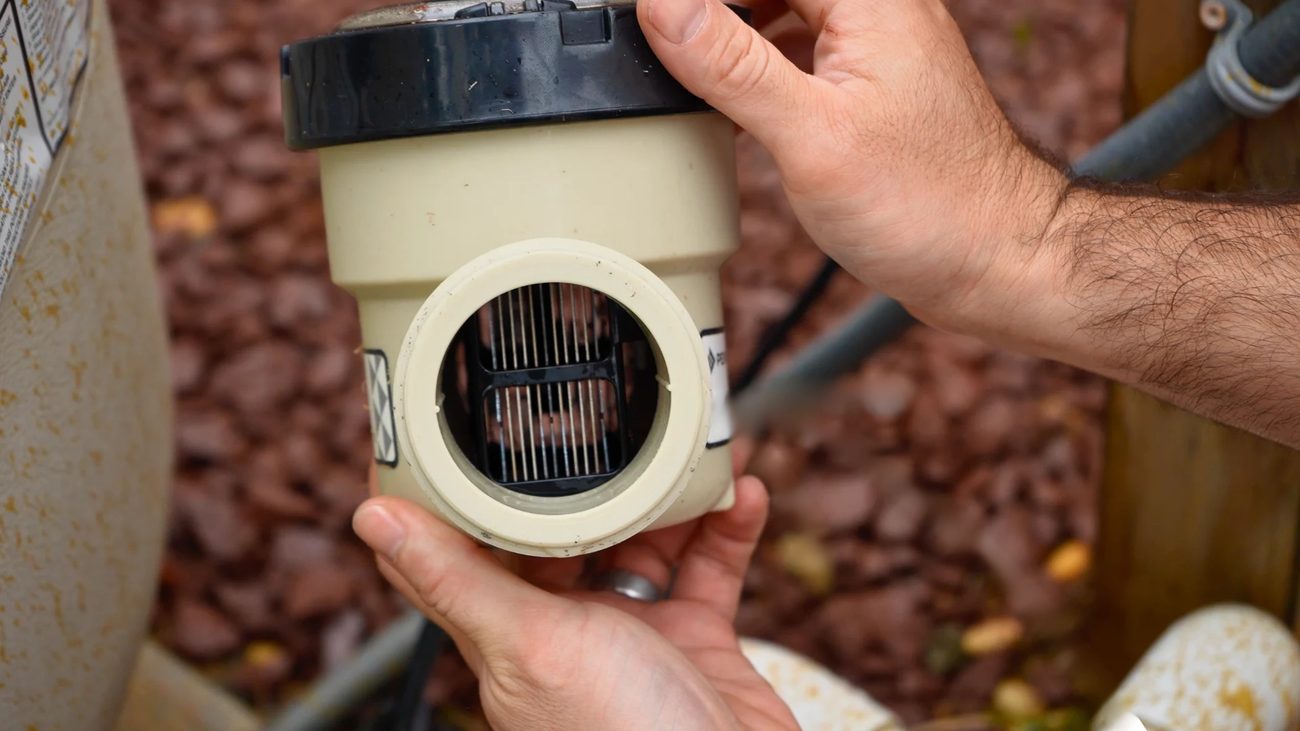
A salt system does not add chlorine from a jug. Your pool water, lightly salted, flows through the cell, and inside it a set of metal plates carries an electrical charge that converts the salt into fresh chlorine as the water passes. That is the whole trick, and it runs quietly every time the pump is on.
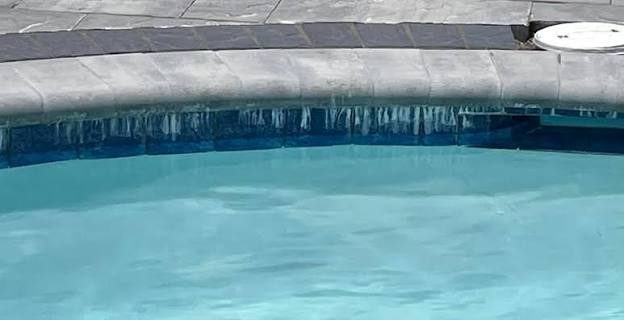
The catch is that those plates are the one surface in your entire system where scale does the most damage. As calcium builds a white crust on the plates, it insulates them, and the cell has to work harder to make the same chlorine, until it simply cannot keep up. Salt pools also tend to drift high on pH over time, which nudges the water toward scaling, and here in New Braunfels our hard, calcium-rich water gives that scale a running start. It is the same enemy behind the white line on your pool tile, just landing on a part you cannot see.
First, Inspect the Cell (Do Not Clean It Yet)
The single most important habit with a salt cell is to look before you clean. Cleaning a cell that does not need it does more harm than good. Check it about every three months.
- Turn the system off at the control panel, and shut off the pump. Never unscrew the cell with the pump running.
- Unscrew the unions on each side of the cell and lift it out. Have a towel ready, a little water will spill.
- Rinse the inside with a garden hose on a firm setting. Loose debris flushes out and lets you see the plates clearly.
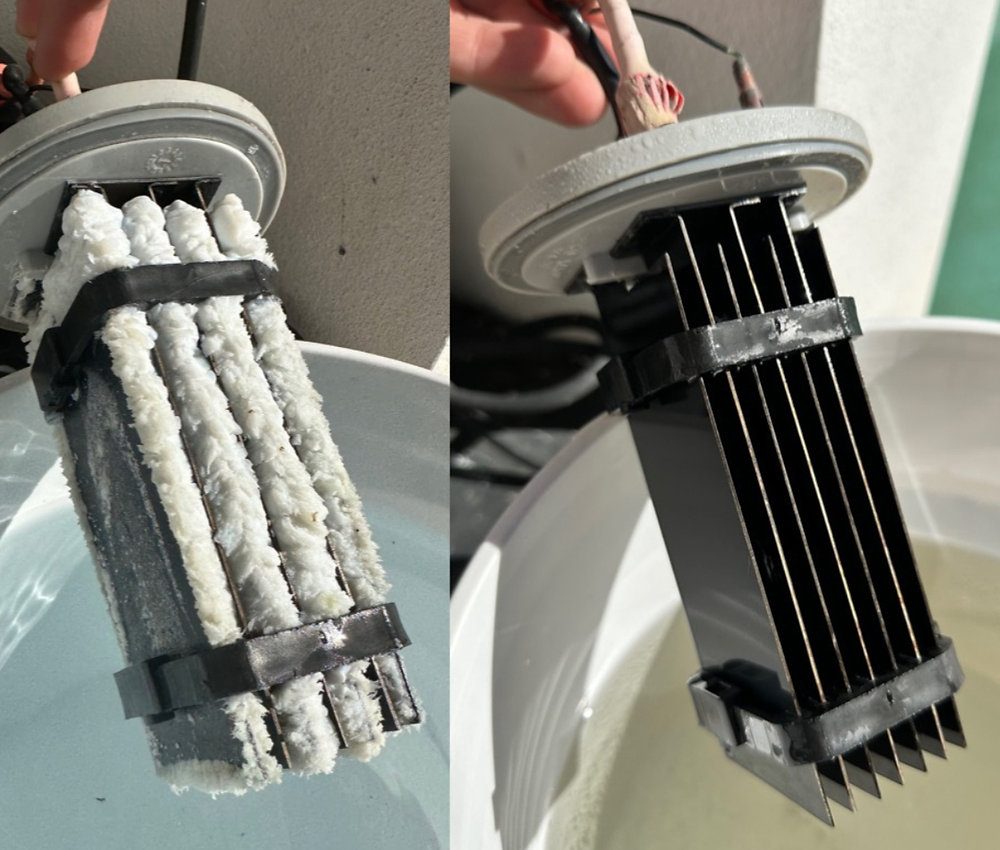
- Look down into the plates in good light. Clean plates look dark and shiny. If you see white, flaky calcium bridging or coating the plates, it is time to clean. If they are clean, put it right back.
- While it is out, check the cell body for cracks and the plates for heavy wear, flaking, or bare spots. Those point toward replacement, not cleaning.
How to Acid-Wash a Salt Cell Safely
If, and only if, you saw real scale, a diluted acid wash dissolves it. This is straightforward, but you are handling muriatic acid, so work outside, wear gloves and eye protection, and follow the order carefully.
- Mix the solution in a plastic bucket or a cell cleaning stand. Add the acid to the water, never water to the acid, to avoid a dangerous splash.
- Use a gentle dilution: start around one part muriatic acid to ten parts water, and go no stronger than about one part acid to four parts water for heavy scale. Weaker is safer for the plates.
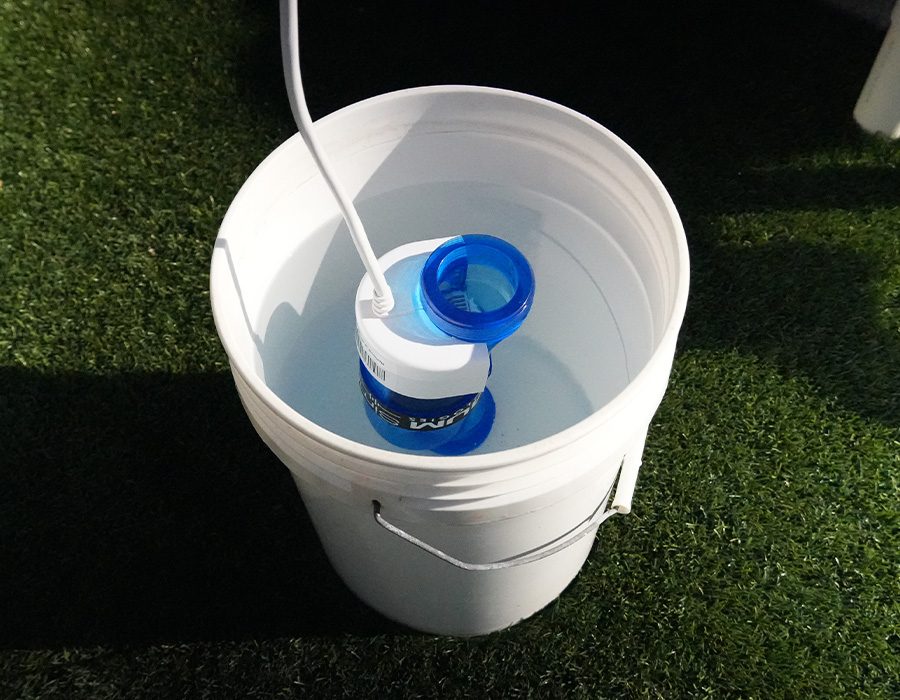
- Stand the cell in the solution, plate side down, so the liquid covers the plates but not the electrical connection at the top. A cleaning stand holds it steady; otherwise cap one end and fill the cell.
- Let it soak and watch it foam. That fizzing is the acid dissolving the calcium. When the bubbling stops, usually within ten to fifteen minutes, the scale is gone.
- Pour the solution out safely, then rinse the cell thoroughly inside and out with a hose for at least a minute. Leftover acid keeps etching the coating even after you reinstall it.
- Reinstall the cell, hand-tighten the unions, open the system back up, and confirm normal flow before turning the generator on.
The acid-to-water mix
Always pour the acid into the water, never the reverse
acid
A weaker mix is gentler on the plate coating. Soak only until the fizzing stops.
The Mistake That Kills Cells Early
Most salt cells have a built-in self-cleaning feature called reverse polarity, where the system periodically flips the electrical charge to shed some scale on its own. It is helpful, but it does not do the whole job, especially in our water, which is why the occasional manual wash is still needed.
What it does mean is that you should never scrub the plates with a wire brush or a screwdriver to knock scale off, and you should never soak a cell in strong acid “just to be safe.” Both remove the coating that makes the plates work, and a cell with a worn coating makes weak chlorine no matter how clean it looks. Gentle, occasional, only-when-needed cleaning is what gets you the full lifespan.
How to Know It Needs Replacing, Not Cleaning
A cell does not last forever. Even a well-kept one wears out in roughly three to seven years, because the plate coating is slowly consumed every time it makes chlorine. The trick is telling a worn-out cell apart from a merely dirty one, so you replace it when it is truly done and not a season early.
Clean it, leave it, or replace it?
Start by looking at the plates and your chlorine output
CLEAN IT
White scale on the plates and chlorine output slipping. A diluted acid wash brings it back.
LEAVE IT
Plates dark and shiny, output normal. Do not acid-wash. Cleaning it now only shortens its life.
REPLACE IT
Low output with salt, temperature, and flow all correct, repeat “inspect cell” warnings, or worn or flaking plates.
The tell for replacement: you cleaned it, chemistry is right, and it still cannot make enough chlorine.
The clearest replacement sign is this: your salt reads in range, the water is warm, the flow is good, you have cleaned the cell, and the generator still cannot hold chlorine. At that point the plates are spent. A “check cell” or “inspect cell” message that keeps coming back after a good cleaning is the controller telling you the same thing. When you get there, matching the right cell to your system and salt level matters, and it is worth having a pro handle the swap and dial it in through our salt system service.
Cleaning vs. Replacing, at a Glance
| Just needs cleaning | Needs replacing | |
|---|---|---|
| Plates look | White, scaled, crusty | Worn, flaking, bare, or cracked body |
| Output after a wash | Comes back to normal | Stays low even when chemistry is right |
| Controller | Warning clears after cleaning | “Inspect cell” keeps returning |
| Age | Any age | Often 3 to 7 years or more |
| Fix | Gentle acid wash, only when scaled | New cell matched to your system |
Keeping the Cell Alive Longer
You cannot change our water, but you can get every season the cell has in it:
- Keep pH and calcium in range so the cell scales more slowly. Salt pools creep up on pH, so check it regularly and bring it down when it climbs.
- Keep salt in the range your manufacturer specifies. Running low makes the cell strain, and running high wastes salt and can accelerate wear.
- Inspect every few months and clean only when you see scale. Restraint is what protects the coating.
- Do not ignore an “inspect cell” light. Catching scale early means a quick wash instead of a heavy one.
- Have the cell and the rest of the system checked as part of steady weekly pool service, so small issues never become a dead cell in July.
Not sure if your cell needs a wash or a replacement?
Poncho’s inspects the cell, cleans it the right way, and only recommends a new one when it is truly spent, then matches and installs it. Serving New Braunfels and Comal County.
Get a Free Quote