Your pool pump is one of the quietest, most expensive things in your yard. It hums away at the equipment pad and nobody thinks about it, but an old single-speed pump runs at full blast every second it is on, whether the pool needs that much flow or not. In our long swim season, that is a lot of hours of a big motor pulling maximum power, and it shows up on your electric bill every month.
A variable-speed pump is the obvious upgrade, but the savings claims sound too good to be true: cut your pump energy by half, seventy percent, ninety percent? Surely the salesperson is rounding up. So the honest question is the one in the title: will a variable-speed pump actually cut your electric bill, or is that just marketing?
The short answer is yes, and by a lot, and the reason is not marketing at all. It is a piece of physics called the affinity law, and once you see it, the numbers make complete sense.
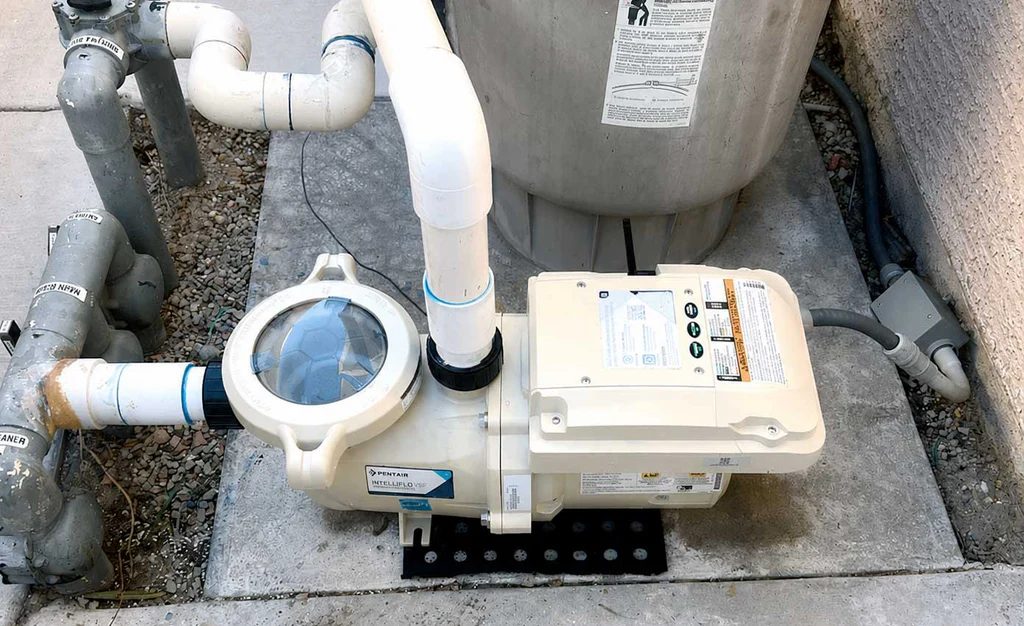
Yes, and Here Is Why: the Affinity Law
Here is the counterintuitive part that makes variable speed so effective. A pump’s power draw does not rise in step with its speed, it rises with the cube of its speed. Slow the motor down a little and the power drops a lot.
Cut the speed in half and the pump moves about half the water, which sounds like a wash. But because power follows the cube of speed, it now draws only about one-eighth of the electricity. So you run the pump twice as long at half speed, move the same total amount of water, and still use a fraction of the energy. That is the whole trick, and it is why a variable-speed pump can slash your pump’s power use.
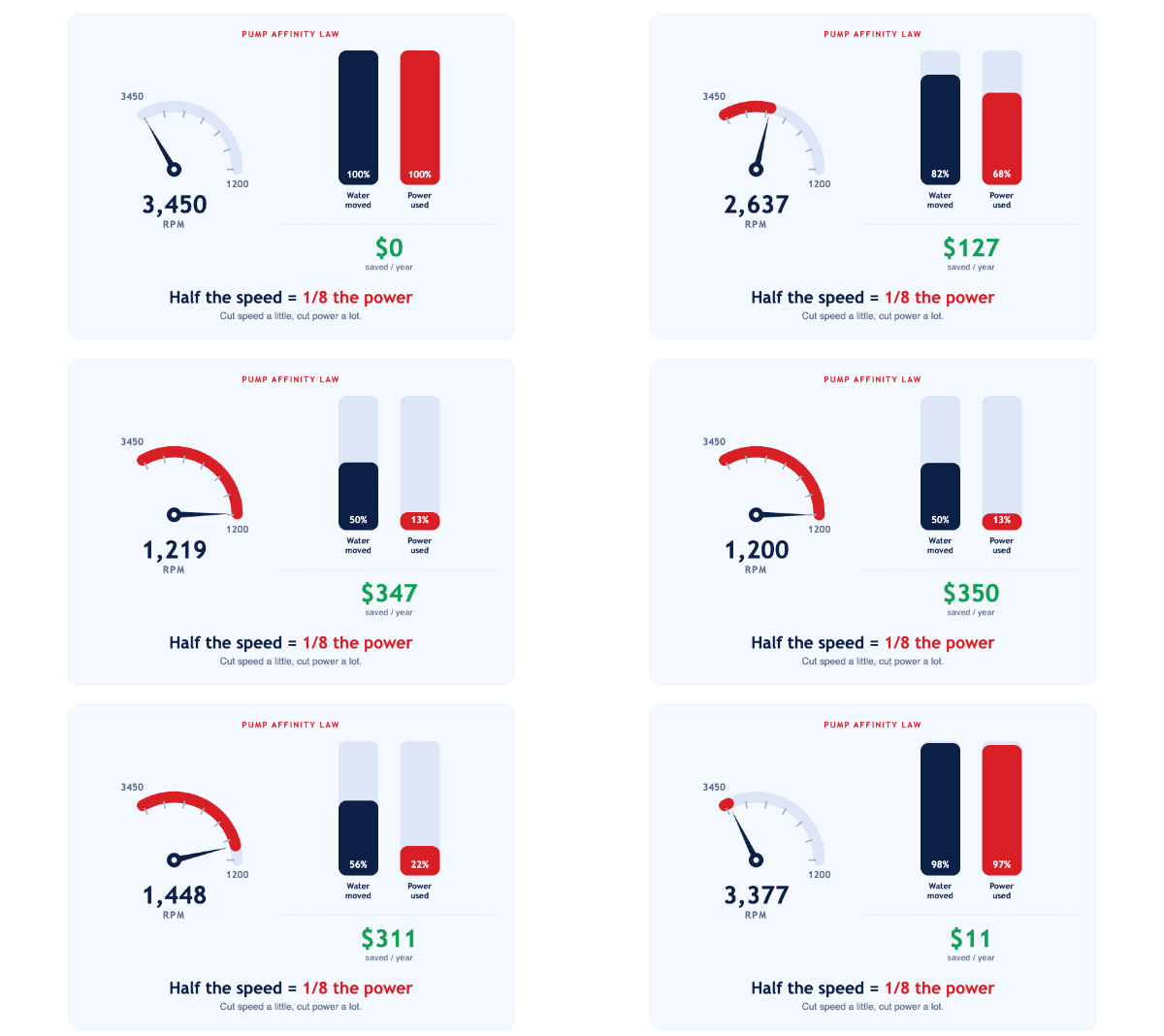
To put real numbers on it: dropping a pump from 3,450 down to about 2,400 rpm, only a thirty percent speed cut, drops its draw from roughly 2,000 watts to under 600, about a seventy percent reduction in power. Run it even slower for filtering and cleaning, which is all most pools need most of the time, and the savings grow from there.
What That Means in Real Dollars
The physics is nice, but the bill is what matters. ENERGY STAR certified variable-speed pumps save up to about seventy percent on pump energy compared with a conventional pump, which works out to roughly $350 and 2,800 kilowatt-hours a year for a typical pool. Your exact number depends on your pool size, how many hours you run, and your electricity rate, but the ranges are real:
Typical yearly savings by pool size
Versus an old single-speed pump, over a season
SMALL POOL
$180 to $420
per year
MEDIUM POOL
$350 to $850
per year
LARGE POOL
$700 to $1,400
per year
Based on running 8 to 12 hours a day across a six-month season. Actual savings vary with rate and runtime.
Single Speed vs. Variable Speed, Side by Side
| Single-speed pump | Variable-speed pump | |
|---|---|---|
| How it runs | One speed, full blast, always | You set the speed to the task |
| Power draw | High the whole time | Low most of the time (cube law) |
| Energy use | Baseline | Up to ~70% less |
| Noise | Loud at full speed | Much quieter at low speed |
| Upfront cost | Cheaper to buy | Costs more, pays it back |
| Availability | Being phased out by law | The standard for new pumps |
Why It Saves the Most in New Braunfels
A variable-speed pump saves the most where the pump runs the longest, and that describes us perfectly. Our long, warm season means pumps run many hours a day for most of the year, so every hour spent at low speed instead of full blast stacks up into real money. Pair that with Texas electricity rates, which are nobody’s idea of cheap in the summer, and the payoff here is bigger than it would be in a short-season climate. The same pump that saves a northern pool a few hundred dollars can save a hard-run Texas pool considerably more.
What Is the Catch?
The honest downside is the sticker price. A variable-speed pump costs more up front than a basic single-speed, and that is the number that makes people hesitate. But the energy savings pay that premium back, typically within one to three years, and then the pump keeps saving you money every year after that for the rest of its life. Over the full lifespan of the pump, it is not close: the variable-speed unit wins on total cost. It also runs far quieter, which your neighbors will appreciate.
You Probably Have to Upgrade Anyway
Here is the part that settles the debate for a lot of people: single-speed pumps are being regulated out. Energy rules now require most pool pumps of one horsepower or more to run at variable or multiple speeds, so when your old single-speed pump finally dies, its replacement will be variable-speed regardless. That makes a failing pump less of a repair decision and more of an upgrade opportunity, a chance to start banking those savings instead of paying to patch an energy hog. If your pump is limping along, it is worth weighing a pump repair against simply moving to the more efficient unit.
Getting It Set Up Right
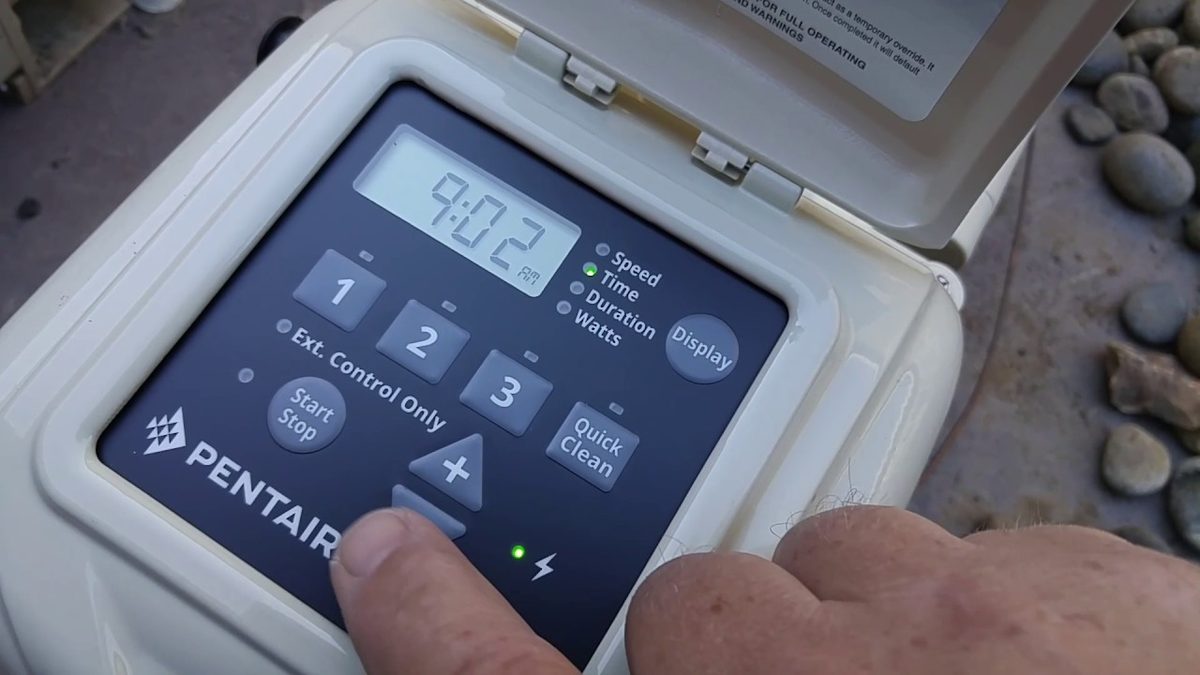
A variable-speed pump only saves you money if it is programmed to actually run slow. Out of the box it can be set to run fast all the time, which throws away the whole advantage. The savings come from a smart schedule: a long, low-speed run for everyday filtering, with brief bursts of higher speed only when you are vacuuming, running a heater or a spa, or backwashing. Dialing that schedule in for your specific pool, pump, and equipment is where a proper pump installation earns its keep, so the pump is right-sized and set to save from day one.
Ready to stop overpaying to run your pool?
Poncho’s sizes, installs, and programs variable-speed pumps to save from day one, and services the one you have. Serving New Braunfels and Comal County.
Get a Free Quote