You are buying a filter for a new pool, or your old one has finally given up, and you have three choices staring back at you: sand, cartridge, and DE. Every one of them sounds fine, every salesperson has a favorite, and none of the spec sheets tell you which one actually fits your pool, or your water bill.
Pick wrong and you feel it all season. The wrong filter here means either water that never quite looks crisp, or endless backwashing you cannot always do when the city is restricting water, or more fussy maintenance than you ever signed up for. And swapping a filter is not something you want to redo in a year.
So here is the honest head-to-head, how each type actually filters, what it costs you in effort and water, and then a straight answer on which one makes the most sense for a New Braunfels pool.
How Each Filter Actually Works
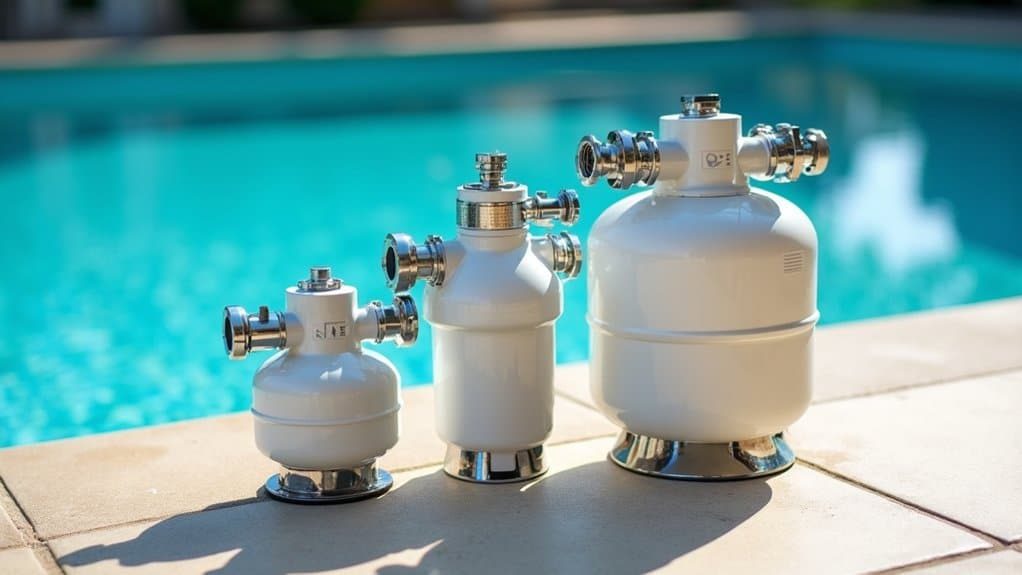
All three do the same job, pulling dirt out of the water as the pump pushes it through, but they trap different-sized particles, and the number that matters is the micron. A micron is tiny, about the width of a speck you can barely see, and the lower the micron number a filter can catch, the finer it cleans.
- Sand passes water through a bed of special filter sand. It catches particles roughly in the 25 to 100 micron range, the coarsest of the three, though it filters a bit finer as the bed loads up.
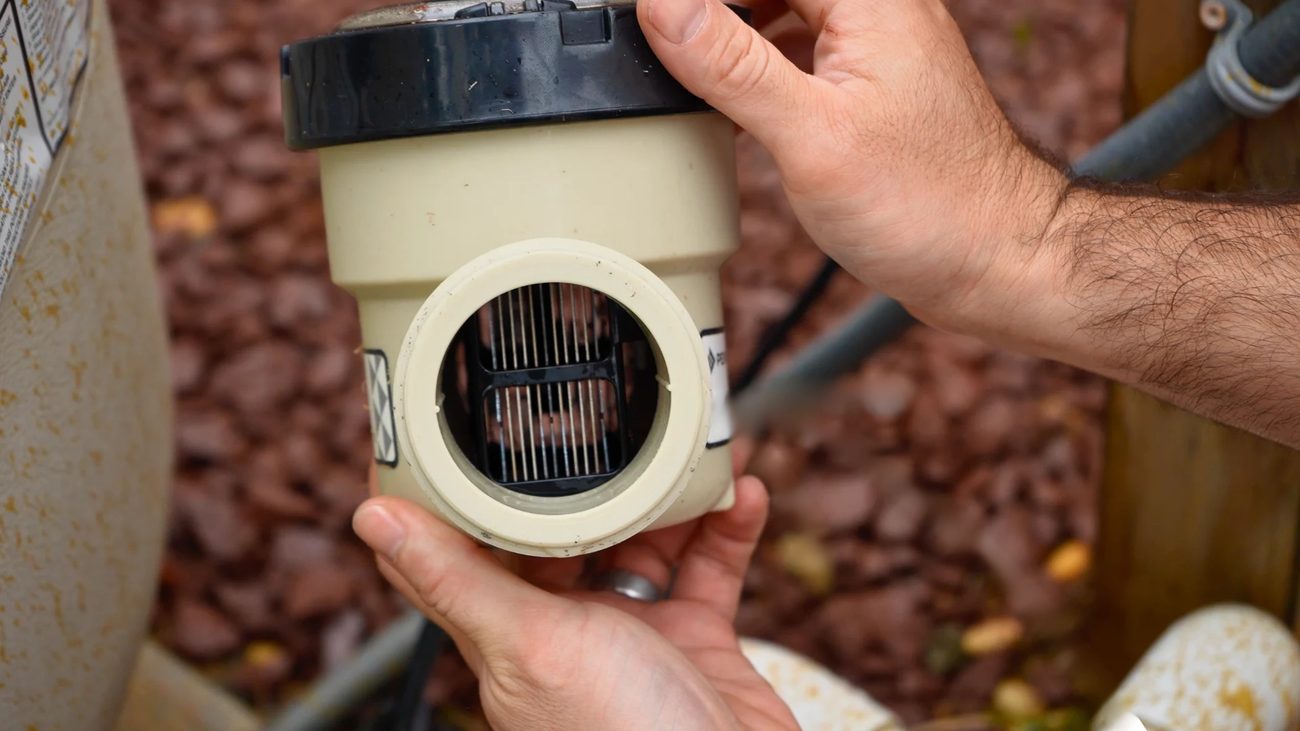
- Cartridge passes water through a pleated fabric element, catching down to about the 10 to 25 micron range, noticeably finer than sand.
- DE, short for diatomaceous earth, coats its internal grids with a fine powder and catches the smallest particles of all, roughly 2 to 6 microns, the finest residential filtration you can buy.
How fine each filter catches
Where each traps particles on the micron scale
Lower micron = finer filtration. The further left the bar, the smaller the particles that filter catches.
Sand: the Simple Workhorse
Sand filters are the old reliable. They are the least expensive to buy and run, they are forgiving, and cleaning them is simple: you backwash, reversing the flow to flush the trapped dirt out to waste, no opening the tank. The sand itself lasts for years before it needs changing.
The trade-offs are filtration and water. Sand is the coarsest of the three, so the water is clean but not glass-clear. And every backwash sends a few hundred gallons of pool water down the drain, which is the sand filter’s real weakness here, where water restrictions are a regular part of summer. When the sand does wear out, swapping it is a job worth handing to a pro; that is our sand change service.
Cartridge: the Water-Smart All-Rounder
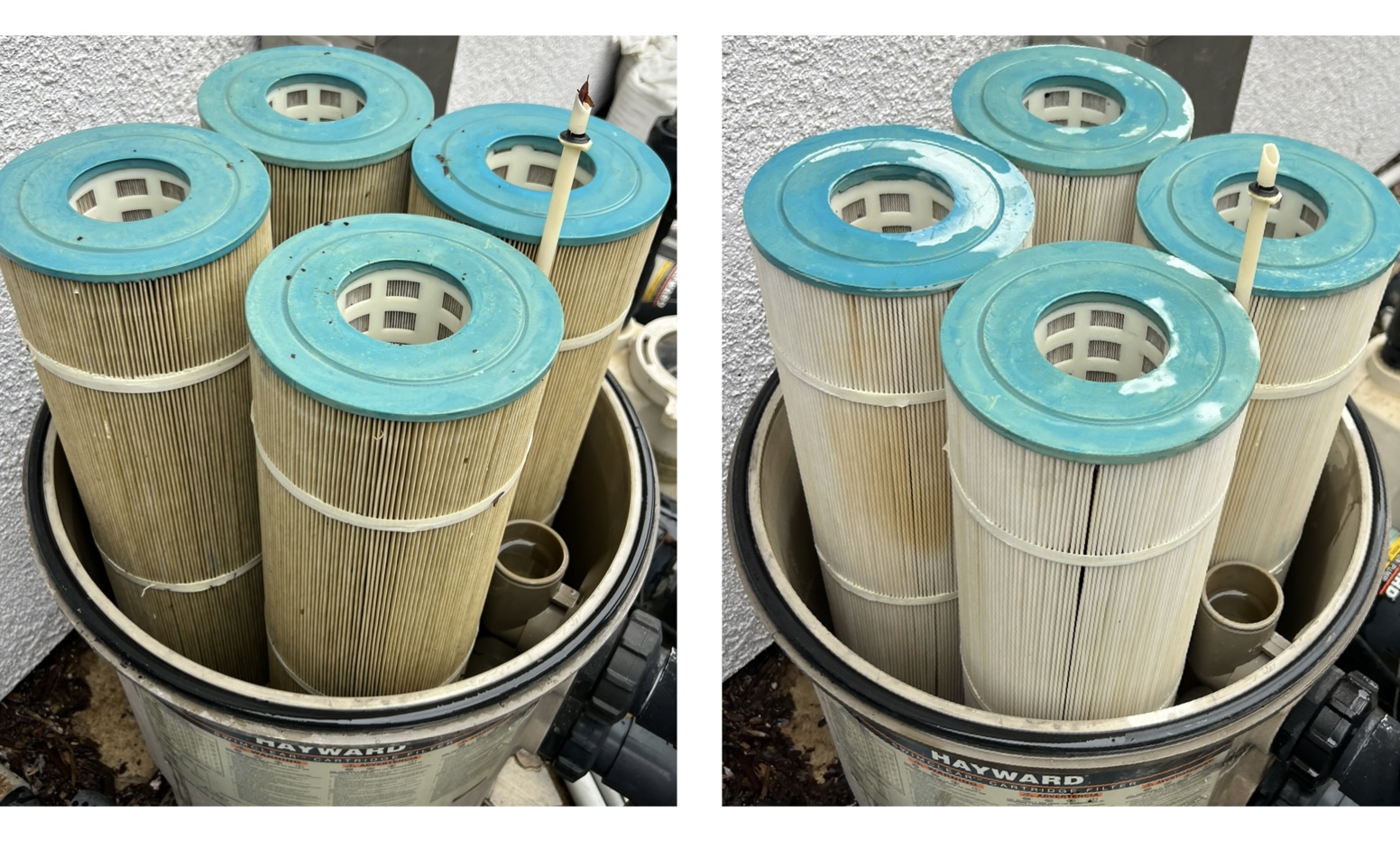
Cartridge filters have become the default for most New Braunfels backyard pools, and for good reason. They filter finer than sand, they run at lower pressure, which is easier on your pump, and the big one: they do not backwash. You clean a cartridge by pulling the elements and hosing them off, so you are not flushing pool water to waste every couple of weeks. In a region that restricts watering, that water saving adds up fast.
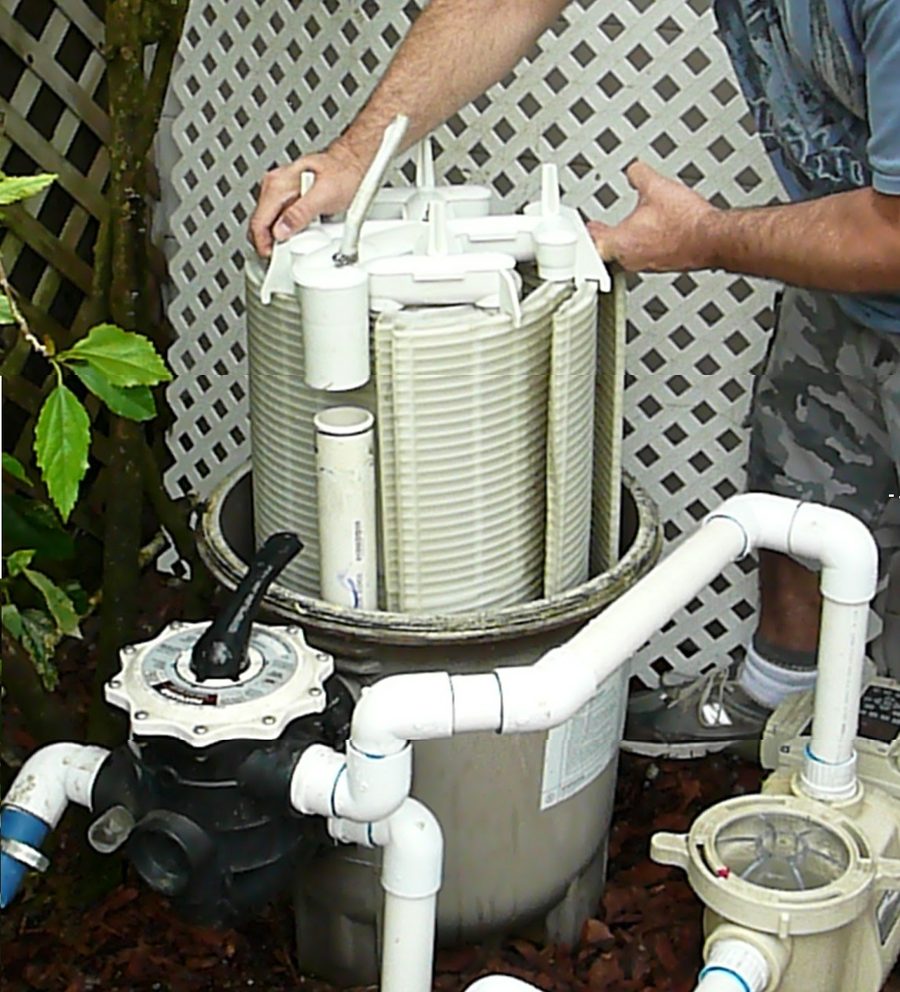
The trade-offs are hands-on cleaning and element life. You have to physically remove and rinse the cartridges, and in our hard water they also need a periodic chemical soak to shed scale and oils. Each cleaning wears the fabric a little, so the elements eventually need replacing. Staying on top of that is what regular filter cleaning is all about.
DE: the Finest Filtration
DE filters give the clearest water you can get on a residential pool, catching particles down to just a few microns. If someone in the house has allergies or you simply want that polished, sparkling look, DE delivers it.
The trade-off is maintenance. DE is the most involved of the three: you backwash it like a sand filter, but then you must recharge it by adding fresh DE powder through the skimmer to recoat the grids, and a few times a season you open it up and hose the grids clean. So it uses water like a sand filter and adds the ongoing cost and step of DE powder. It is the most filtration for the most effort.
The Three, Side by Side
| Sand | Cartridge | DE | |
|---|---|---|---|
| Filters down to | 25 to 100 microns | 10 to 25 microns | 2 to 6 microns (finest) |
| How you clean it | Backwash | Hose off elements | Backwash + recharge DE |
| Backwashes water? | Yes, high water use | No, water-smart | Yes, plus DE cost |
| Effort | Lowest | Moderate | Highest |
| Media replacement | Sand every several years | Elements every ~1 to 3 years | Grids last years; DE each backwash |
| Upfront cost | Lowest | Moderate | Highest |
| Best for | Budget and simplicity | Water saving + clarity | The clearest possible water |
Which Is Best for a New Braunfels Pool?
There is no single winner for every pool, but for our area there is a clear front-runner. Two local realities decide it: water restrictions and hard water.
For most New Braunfels pools, a cartridge filter is the smart default. It filters finer than sand, runs gently on your pump, and never backwashes, so it does not pour pool water down the drain during the exact months the city is asking everyone to conserve. That water saving, season after season, is the single biggest practical difference here.
Choose sand if budget and simplicity come first and you do not mind coarser filtration or the water lost to backwashing. Choose DE if you want the absolute clearest water and you are willing to do the extra maintenance and buy DE powder to get it. And know that our hard water scales every one of them faster, so whichever you pick, keeping the water balanced and the filter clean matters more here than it does in soft-water regions.
Pick by what matters most to you
The fastest way to a decision
LOWEST COST & EFFORT
Sand
Cheapest and simplest, if you accept coarser water and backwashing.
SAVING WATER (BEST FOR US)
Cartridge
No backwash, finer than sand, easy on the pump. The local default.
CLEAREST WATER
DE
Finest filtration, if you will do the extra maintenance.
Switching or Installing a Filter
If you are replacing a filter or building a new pool, the filter should be sized to your pool’s volume and your pump, not just picked off a shelf. An undersized filter clogs constantly and never quite keeps up, and the wrong type for your habits becomes a chore you resent. Matching the filter to the pool, and to how much hands-on maintenance you actually want to do, is the part worth getting right, which is where professional filter installation earns its place.
Not sure which filter fits your pool?
Poncho’s helps you pick the right filter for your pool and our water, then installs and maintains it. Serving New Braunfels and Comal County.
Get a Free Quote