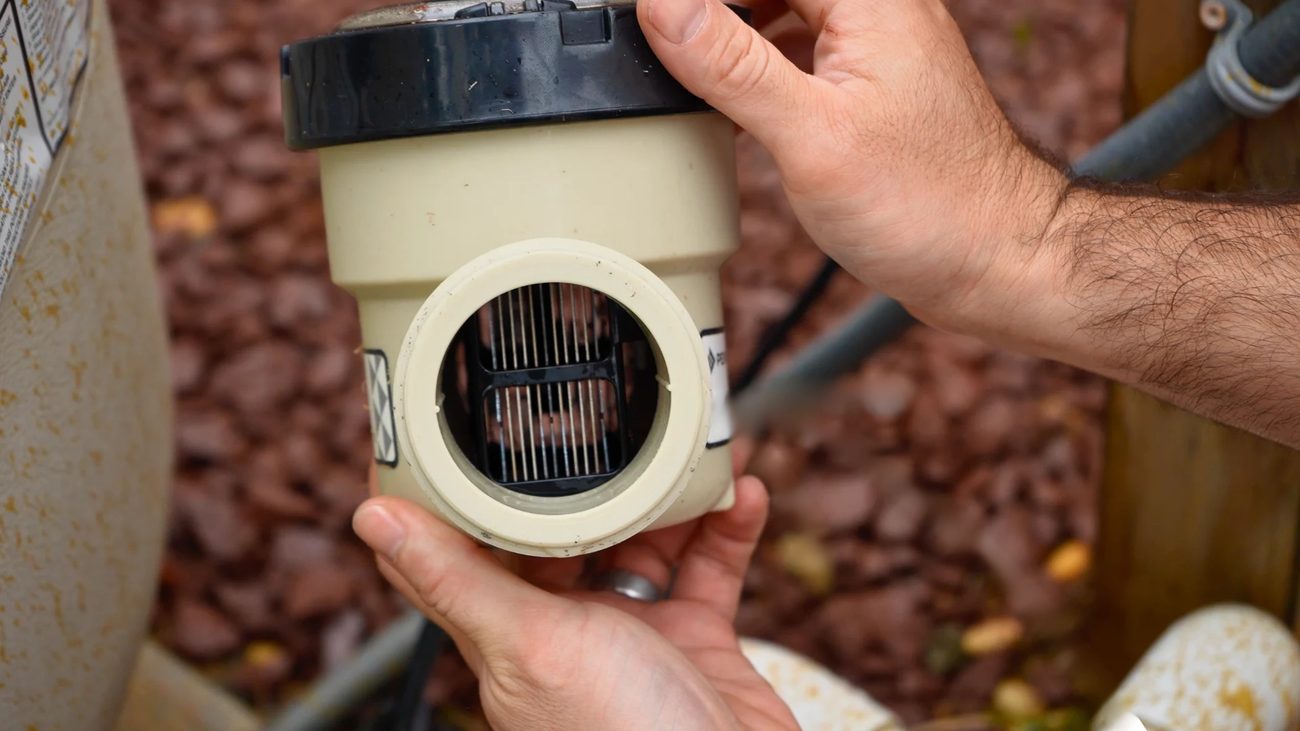
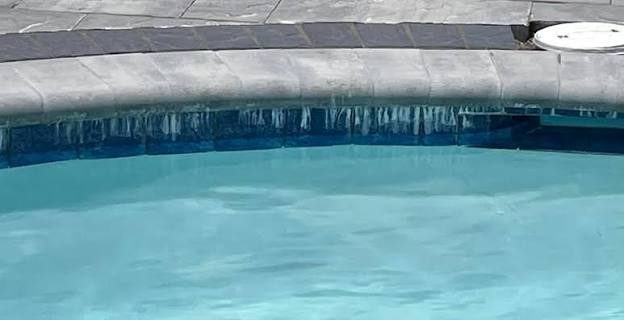
You wiped the tile and the white line is still there. You scrub harder, and it does not budge. That chalky crust riding along your waterline is not dirt, and it will not rinse or brush away, because it is calcium, the same mineral that turns into rock, cemented onto your tile.
Left alone, it does not just sit there looking rough. The deposit hardens the longer it is exposed to air, so this month’s soft film becomes next season’s cement. It roughens the surface so more scale grabs on faster, it can cloud your water and clog a filter, and in a heater it chokes the flow. And here is the part that stings in New Braunfels: our water is practically built to make it, so it keeps coming back no matter how often you wipe.
The good news is that calcium is beatable once you know which kind you are fighting. This guide shows you the sixty-second test that tells you which type you have, the right way to remove each one without wrecking your tile, and how to slow it down so you are not doing this every month.
Why New Braunfels Water Scales So Fast
Calcium scale is a hard-water problem, and New Braunfels has some of the harder water in the country. Our tap runs around 15 grains per gallon, well into the “very hard” range, because it spends its life moving through the limestone of the Edwards and Glen Rose formations. Limestone is essentially calcium carbonate, so the water arrives already loaded with the exact mineral that forms scale. Fill and top off a pool with it all summer and you are steadily concentrating calcium in the water.
From there, chemistry decides whether that calcium stays dissolved or comes out and sticks to your tile. When pH, alkalinity, calcium, and water temperature all run high together, the water tips into a scaling condition and drops calcium onto every surface it touches. Two of those push higher on their own here: our fill water is already high in calcium, and calcium is one of the odd minerals that becomes less soluble as water gets hotter, so a Texas summer and a pool heater both nudge it toward scaling.
First, Find Out Which Calcium You Have
There are two kinds of calcium scale, and they do not come off the same way. Guessing wrong means either wasted effort or a scratched surface, so start with a quick test before you touch a tool.
- Put on gloves and eye protection, and work in a ventilated spot. Have a small amount of muriatic acid on hand, the same acid sold for pool pH.
- Place a few drops of the acid directly on a patch of the white deposit.
- Watch what happens. If it fizzes and foams, you have calcium carbonate, the more common and more forgiving type. If it just sits there and does nothing, you have calcium silicate, the harder, more stubborn type.
That single reaction sets your whole plan. Carbonate is usually a do-it-yourself job. Silicate, especially over a large area, is often one for a pro.
Carbonate or silicate? The acid drop tells you
A few drops of muriatic acid on the deposit
CALCIUM CARBONATE
Foams with acid
●●●
White, flaky, newer
Easier: pumice / scale remover
CALCIUM SILICATE
No reaction
Gray-white, dense, older
Stubborn: abrasive / bead blasting
Field test used across the pool industry: carbonate scale reacts with acid; silicate does not.
Removing Calcium Carbonate (the Easier One)
Carbonate scale, the type that foamed, usually comes off with a little elbow grease and the right tool. Work in shade if you can, keep everything wet, and go gently.
- Lower the water a few inches so you can reach the scaled band of tile, and keep the surface wet the whole time.
- On ceramic, stone, or glass tile, wet a pumice stone and scrub with light, even pressure. Keep both the stone and the tile wet so you polish the scale off instead of scratching the surface.
- For lighter film, a dedicated tile scale remover or a stain eraser block often lifts it with less effort than a pumice stone.
- Rinse as you go to check your progress, and re-balance the water before you bring the level back up.
Removing Calcium Silicate (the Stubborn One)
Silicate scale, the type that did not react to acid, is denser and takes much longer to form, which means by the time you notice it, it has usually been building for a while. It does not give up to a pumice stone as easily.
- On small patches, a wet pumice stone or an abrasive pad can still work with patience, always keeping the surface wet.
- For moderate buildup, abrasive pads made for pool tile do better than a stone.
- For heavy coverage across a lot of tile, the professional answer is bead blasting, which fires fine glass media at low pressure to strip the scale without gouging the tile or plaster underneath. It is fast, thorough, and best left to someone with the equipment and experience.
If you are looking at silicate across most of the waterline, this is usually the point to hand it off. Our pool tile cleaning service exists for exactly this, and it will save you hours of scrubbing and the risk of damaging the tile.
What About Calcium Nodules?
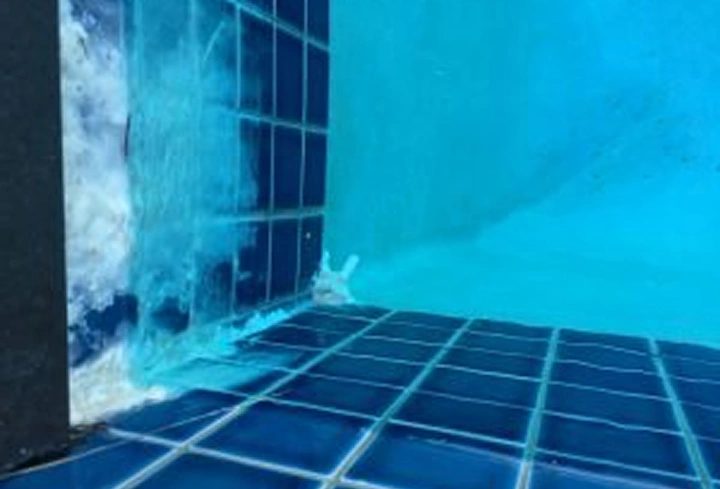
Sometimes calcium shows up not as a line on the tile but as small white bumps or drips on plaster, often oozing from a crack or a hollow spot behind the surface. These are calcium nodules. They are a sign that water is working its way through the plaster and depositing calcium as it surfaces. Scraping the top off does not fix them, because the source is underneath. Nodules usually mean the plaster needs attention, so it is worth having the surface looked at rather than just cleaned.
When It Is the Whole Surface: Acid Washing
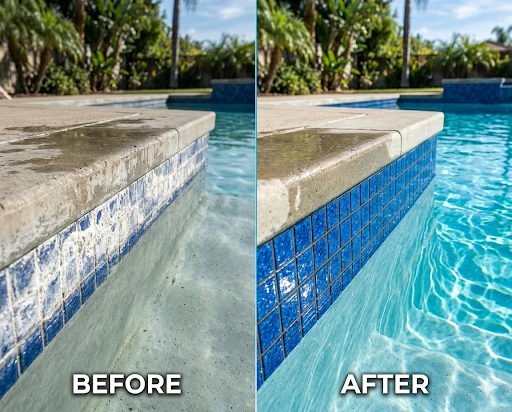
When scale and mineral staining cover the entire plaster surface, not just the tile band, spot-cleaning stops making sense. That is when an acid wash comes in: the pool is drained and the plaster is treated to strip off a thin, scaled layer and reveal fresh surface underneath. It is a bigger job with real risk if done wrong, since acid and an empty pool are both unforgiving, so it belongs with a professional. Done right, it resets a dull, scaled pool to looking close to new.
Keeping Calcium From Coming Back
You will never fully outrun hard water here, but you can slow scale to a crawl by keeping the water from tipping into a scaling condition:
- Keep the balance in range: pH around 7.4 to 7.6, alkalinity in its normal band, and calcium hardness controlled. When those run high together, scale forms; kept in range, it forms far more slowly.
- Watch calcium hardness over the season. Because we top off with hard water, calcium climbs over time. If it gets too high, the fix is partial draining and refilling to dilute it.
- Brush the waterline regularly so a soft film never gets the chance to harden into cement.
- Ask about a scale inhibitor or sequestrant, a product that helps hold minerals in solution so they are less likely to plate out on surfaces.
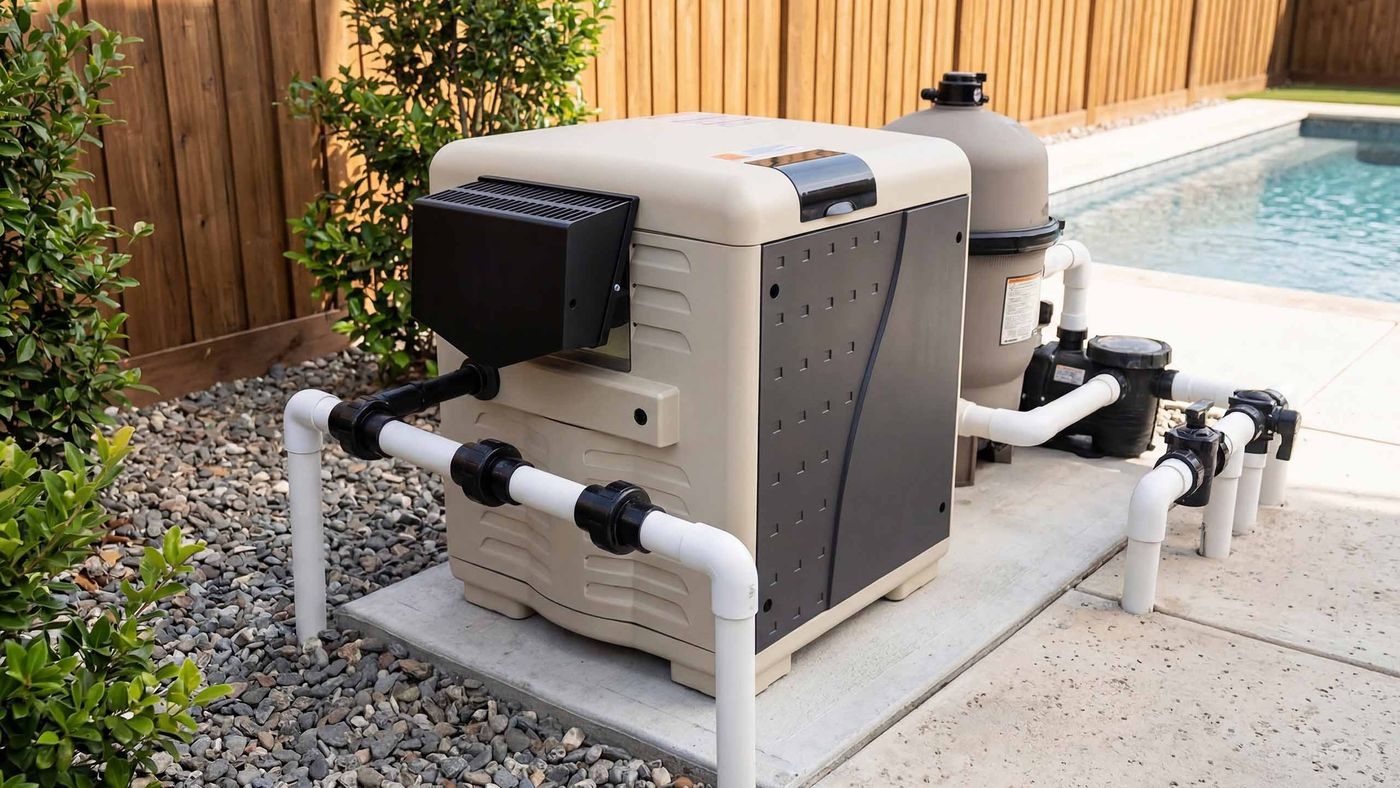
- Have the tile cleaned periodically before buildup gets thick. Staying ahead of it is far easier than removing a hardened band. Steady weekly pool service keeps the balance where it needs to be so scale never gets a foothold, and it is also worth knowing that scale clogs filters, so good filter care is part of the same fight.
Carbonate vs. Silicate, at a Glance
| Calcium carbonate | Calcium silicate | |
|---|---|---|
| Looks like | White, flaky, often at the waterline | Gray-white, dense, sometimes hazy |
| Acid drop test | Fizzes and foams | No reaction |
| How fast it forms | Relatively quickly | Slowly, so it is usually older and harder |
| Removal | Wet pumice stone, scale remover, stain eraser | Abrasive pads, or bead blasting for heavy areas |
| DIY or pro | Often DIY on hard tile | Usually a pro for anything beyond small patches |
Tired of scrubbing the same white line every month?
Poncho’s removes calcium scale the right way, tile cleaning, bead blasting, or a full acid wash, and keeps your water balanced so it comes back slower. Serving New Braunfels and Comal County.
Get a Free Quote