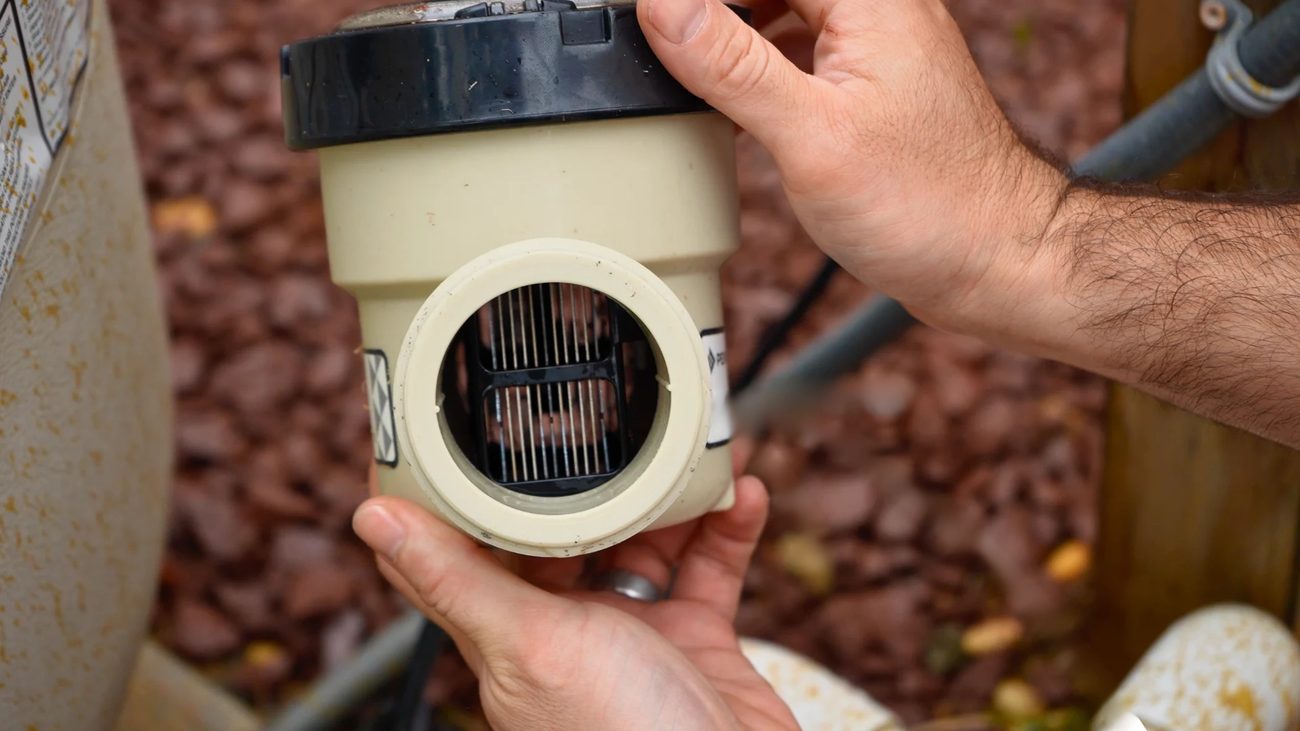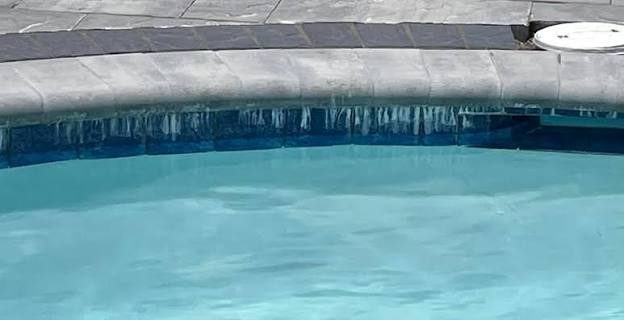
You have shocked the pool, brushed the walls, and run the pump all day, and the water still looks cloudy and tired. Or the pump is roaring away, but you can barely see any movement at the returns. You are doing everything right, and the pool is still not clearing up.
Nine times out of ten, the culprit is the part almost nobody thinks about: the filter. And a clogged filter does not just sit there quietly. It chokes the circulation your whole pool depends on, so the chemicals you keep adding cannot spread and do their job. Algae gets the opening it needs. The starved pump strains against the blockage, which drives your electric bill up and, at its worst, overheats the motor, a repair that runs into the hundreds. All the while, the pool sits unusable in the peak of a New Braunfels summer, exactly when your family most wants to be in it. Worse still, local filters clog faster than the tidy intervals you read on national blogs, so the problem comes around sooner than you would expect.
The good news is that the fix is usually simple: clean the filter. This is a straight guide to cleaning all three types you will find on local pools, cartridge, sand, and DE, plus the one gauge reading that tells you exactly when to do it, written the way we approach filter cleaning on our own routes across New Braunfels and Comal County.
Why New Braunfels Filters Clog Faster Than the Average Schedule Says
Most guides tell you to clean a filter on a fixed schedule. That advice is written for average water. Ours is not average. New Braunfels tap water runs around 15 grains per gallon, which lands squarely in the “very hard” range, and that mineral load leaves calcium scale on filter media the same way it leaves a white ring on your tile. Scale narrows the tiny passages the water flows through, so a filter here reaches the “clean me” point sooner than the same filter would up north.
Add a swim season that runs most of the year, real Hill Country heat, and heavy spring and summer pollen, and your filter is simply catching more, more of the time. None of that is a problem. It just means the calendar is a poor guide here. The pressure gauge is a much better one.
The One Rule That Matters: Watch the Pressure Gauge
Forget guessing by the week. Your filter tells you when it needs cleaning, and it says so through the pressure gauge on the tank. Here is the rule the industry runs on: when the pressure climbs 8 to 10 PSI above the clean reading, it is time to clean or backwash.
The trick is knowing your clean number. Right after you clean or backwash, note the PSI on the gauge. That is your baseline. From then on, glance at it each week. As the filter traps debris, flow gets restricted and pressure rises. Once it is about 8 to 10 PSI over that clean baseline, clean it, whatever the calendar says.
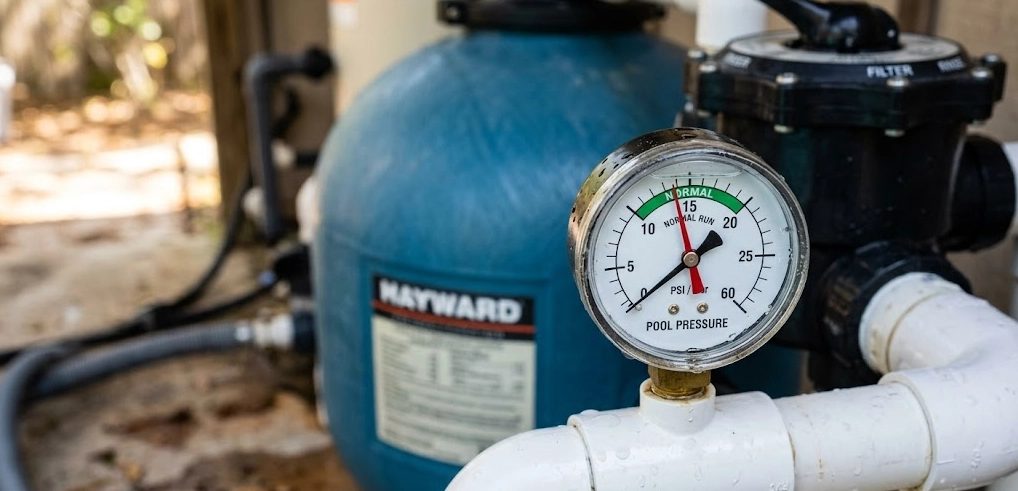
When to clean: read the gauge, not the calendar
Pressure rise above your clean baseline
Industry standard: backwash or clean once filter pressure rises 8 to 10 PSI (55 to 69 kPa) over the clean starting pressure.
One more reading worth knowing: pressure that drops well below your clean number, rather than climbing, points the other way. Very low pressure usually means water is not reaching the filter, a clogged pump basket, a blocked skimmer, or an air leak on the suction side. If cleaning does not restore normal flow, that is a circulation issue worth a closer look.
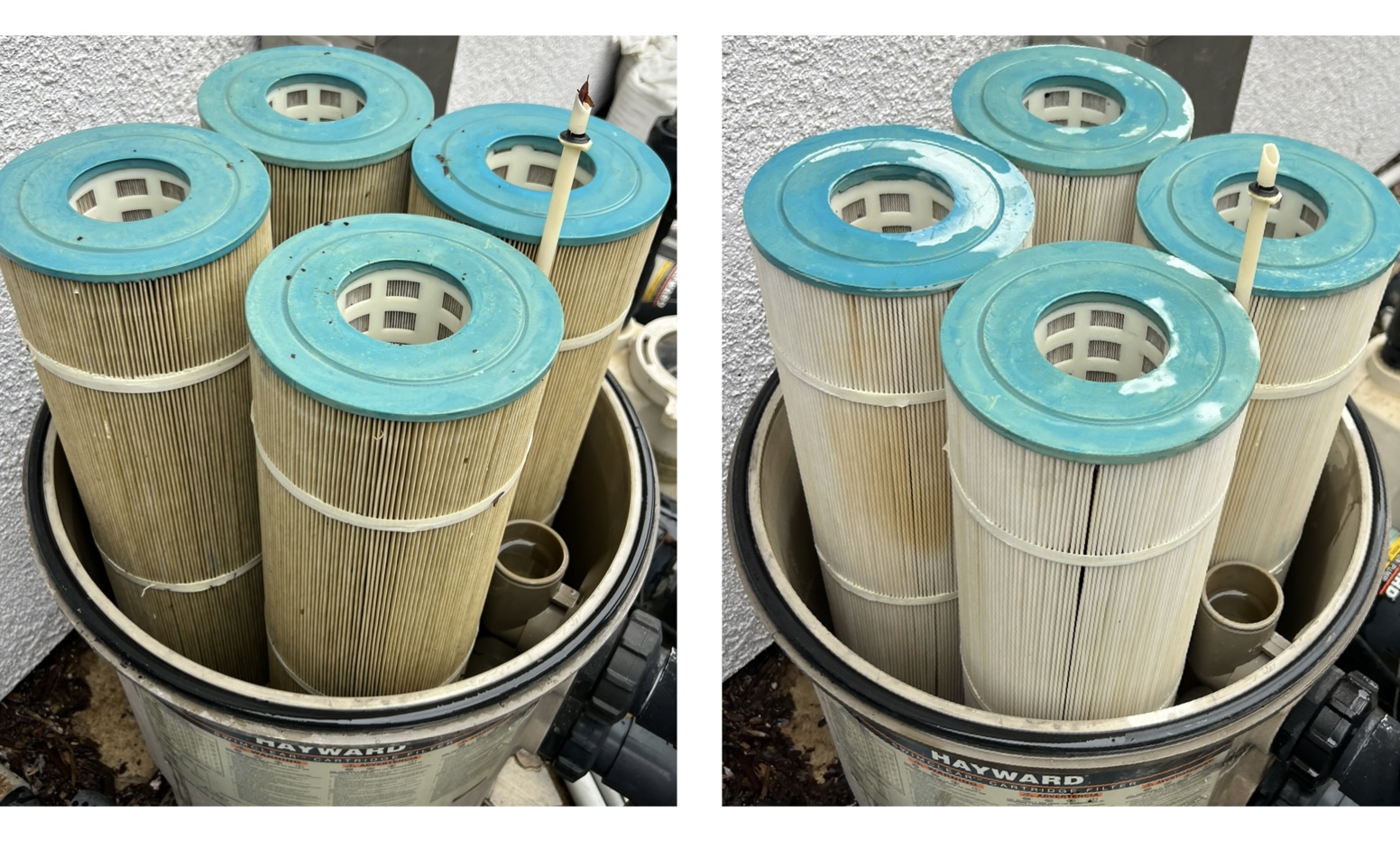
How to Clean a Cartridge Filter
Cartridge filters are the most common setup on New Braunfels backyard pools and spas. They use pleated fabric elements that trap fine debris, roughly down to the 10 to 25 micron range, and they clean up with nothing more than a hose.
- Turn the pump off and let the system depressurize. Open the air relief valve on top of the tank to release pressure.
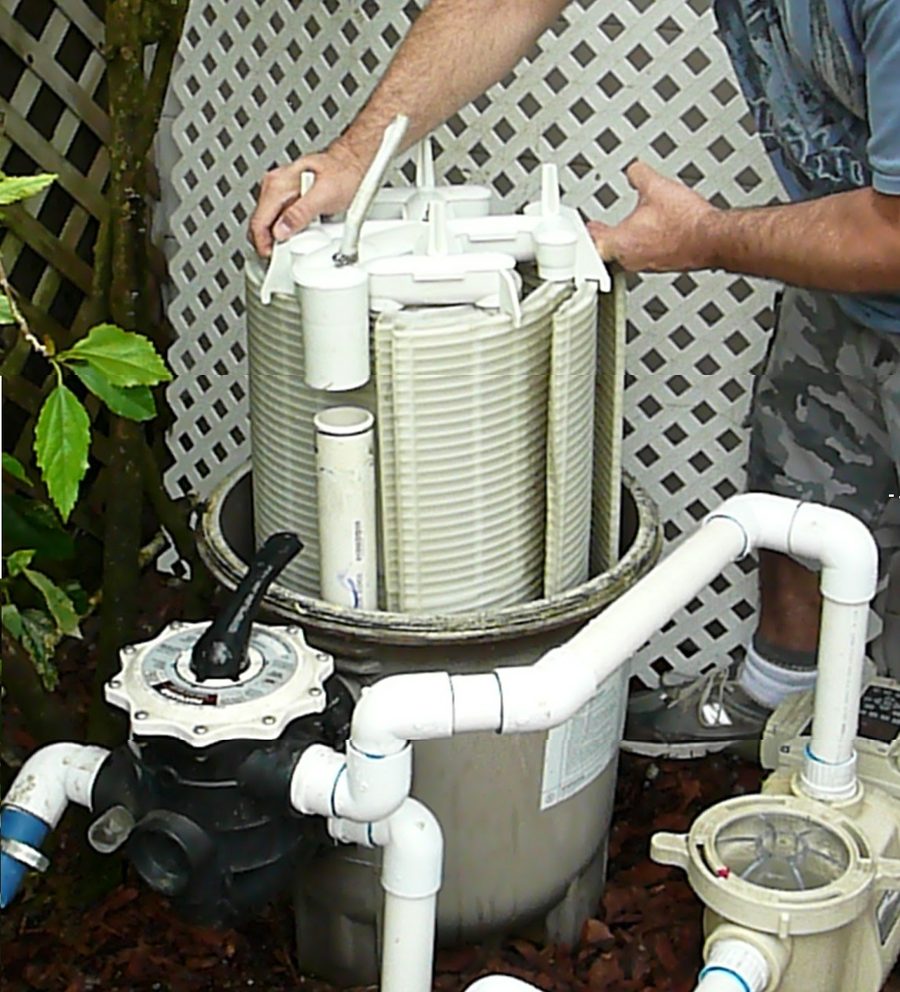
- Open the tank clamp, lift off the lid, and remove the cartridge or cartridges.
- Hose them down top to bottom with a firm spray, spreading each pleat so you rinse the debris trapped in the folds, not just the surface.
- Inspect as you go. Look for tears in the fabric, a cracked end cap, or a damaged manifold. A torn cartridge lets debris straight back into the pool and needs replacing.
- For a filter that has scaled up in our hard water, or that feels greasy, soak the elements in a dedicated cartridge cleaner. A hose alone does not remove calcium scale or oils.
- Reassemble, refill the tank per your manual, and start the pump with the air relief open until water flows out steadily. Note the new clean PSI.
How to Clean a Sand Filter, and When to Change the Sand
Sand filters are the workhorses: simple and forgiving. You do not open them to clean the media week to week. Instead you backwash, reversing the flow to flush trapped dirt out to waste.
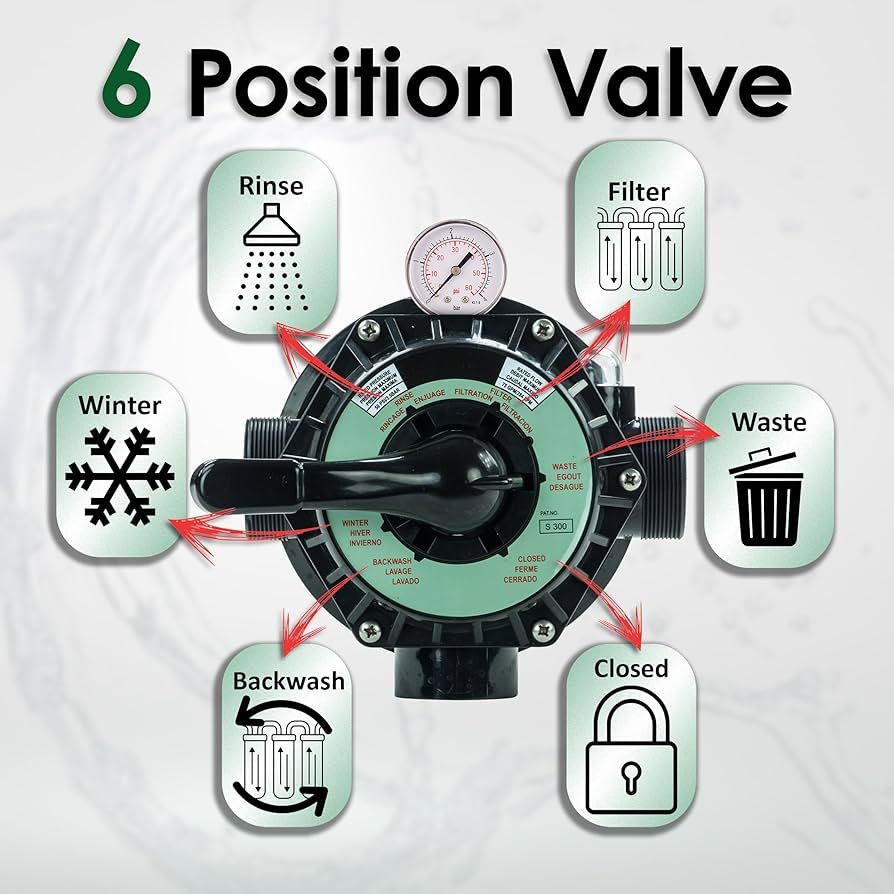
- Turn off the pump. Attach your backwash hose if you have one.
- Set the multiport valve to “Backwash,” then turn the pump on. Run it until the sight glass runs clear, usually a couple of minutes.
- Turn the pump off, set the valve to “Rinse,” and run for 20 to 30 seconds to resettle the sand bed. Then turn off and return the valve to “Filter.”
- Note the clean PSI. Backwash again whenever pressure climbs 8 to 10 PSI over it.
The sand itself lasts for years, not weeks, but it does not last forever. Over time the grains wear smooth and lose their grip on debris, and in hard water they can cement into clumps (“mud balls”) or let water carve channels straight through the bed. For a residential pool, plan on fresh sand every three to five years or so, sooner if you are backwashing constantly with no drop in pressure, which is a classic sign the bed is spent. That is a job worth handing to a pro; see our sand change service.
How to Clean a DE Filter
DE filters give the finest filtration of the three. The grids inside are coated with diatomaceous earth, a fine white powder made of the fossilized skeletons of diatoms, microscopic algae, not the “crushed seashells” you will see repeated online. That powder forms a cake on the grids that traps the smallest particles of any filter type.
- Backwash the same way you would a sand filter to flush most of the used DE out to waste.
- Because backwashing strips the coating, you must recharge the filter: add the correct amount of fresh DE through the skimmer so it recoats the grids. Skipping this step leaves the grids bare and the filter ineffective.
- A few times a season, and at least once a year, open the filter, remove the grids, and hose them clean. Inspect for tears; a torn grid blows DE back into the pool and must be replaced.
How Often, Really: A Quick Comparison
The honest answer is “when the gauge says so.” But here are realistic ranges for a residential New Braunfels pool in season, with the pressure rule as the true trigger.
| Filter type | Clean / backwash | Media replacement | Backwash? |
|---|---|---|---|
| Cartridge | Rinse every few weeks in season; chemical soak periodically (sooner in hard water) | Elements every ~1 to 3 years | No, hose off |
| Sand | Backwash at +8 to 10 PSI (often ~monthly) | Sand every ~3 to 5 years | Yes |
| DE | Backwash + recharge at +8 to 10 PSI; deep-clean grids a few times a season | Grids every several years; replace DE each backwash | Yes |
Cleaning vs. Replacing: When the Filter Is Done
Cleaning restores flow. Replacing is for when the media itself has given up. Reach for replacement when: pressure stays high right after a thorough cleaning, you are backwashing constantly with little effect, the water will not clear no matter what, or you find a tear, crack, or split during inspection. Cartridges that no longer come clean, sand that has turned to mud balls, and torn DE grids are all past saving. Pushing a spent filter just makes your pump and heater work harder for worse water.
When to Call a Pro
Routine cleaning is a fair DIY job. It is worth handing off when the problem is inside the system rather than on the media: chronic high pressure that cleaning will not fix, a cracked manifold or laterals, a multiport valve leaking to waste, or water that stays cloudy after everything checks out. Those point to filter repair or a circulation problem, not another rinse. Keeping the filter right is also part of what steady weekly pool service takes off your plate.
Rather not wrestle the filter in the Texas heat?
Poncho’s keeps your filter clean, your pressure in range, and your water clear, cartridge, sand, or DE. Serving New Braunfels and Comal County.
Get a Free Quote